
[Exhibition] Bugatti Autorail & Mechanical Oddities: A Journey into Ettore Bugatti’s Imagination
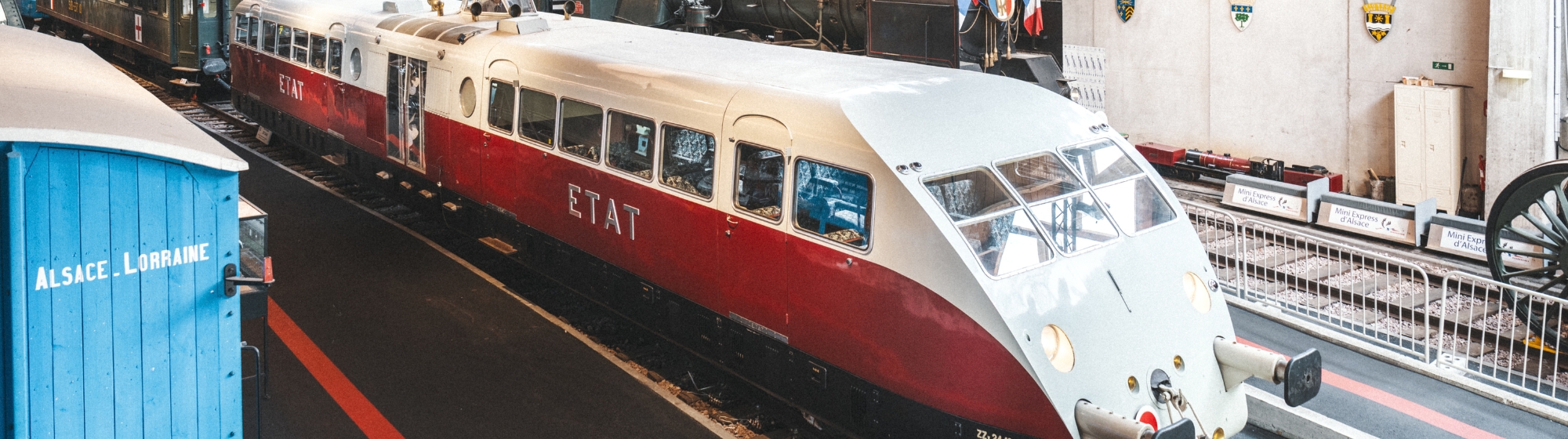
Bugatti Autorail and Unusual Prototypes: Bugatti’s Genius at Rétromobile 2026
Get ready for an extraordinary exhibition! In partnership with the Cité du Train, the Musée National de l’Automobile, and Eiffage Rail, Rétromobile will celebrate Ettore Bugatti’s genius by presenting one of his most monumental creations: the last surviving Bugatti Autorail. But that's not all! This exhibition, illuminated by the Mathieu Lustrerie workshops (certified as "Entreprise du Patrimoine Vivant"), will also feature some of the artist-engineer’s most unique creations.
A Formula 1 single-seater with a rear transverse engine, a prototype Type 73 sports sedan, and Ettore Bugatti’s personal Type 56 electric-powered vehicle… these are just a few of the mechanical oddities that will be showcased in Pavilion 7.1 during the great gathering of classic vehicles from January 28 to February 1, 2026.
See also: [Exhibition] The BMW Art Car World Tour makes a stop at Rétromobile 2026
From Road to Rail: Ettore Bugatti’s Royal Dream
Ettore Bugatti had long dreamed of building a car that would surpass in power, size, quality, luxury, and price everything offered by the manufacturers of the time. The project took shape in 1926, and thanks to the flourishing results of his business, he designed the very first prototype of the Type 41, which he quickly dressed with a modified Packard body to drive through the roads of France.
The vehicle, a total departure from the standards of the time, remained true to the principles of the brand (semi-elliptical leaf springs crossing a hollowed-out axle, aluminum-cast wheels…) while incorporating some new innovations (an 8-cylinder engine of about 250 horsepower, originally designed for aviation, a three-speed gearbox integrated into the rear axle…). The Bugatti Royale was born.
Bugatti Royale: Six Queens, Six Robes
Confident in his vision, Ettore Bugatti had planned to produce twenty-five units of the Royale. Overwhelming in price - six times the price of the most expensive Rolls-Royce - and with characteristics such as weighing over 3 tons and standing nearly 2.5 meters high, the Bugatti Type 41 would ultimately be produced in only six units.
None of the three kings initially considered - Alfonso XIII of Spain, Zog of Albania, and Carol of Romania - were able to acquire it. Only three were sold during Ettore’s lifetime. A Parisian tailor, Armand Esders, a Munich-based gynecologist, Joseph Fuchs, and a British food industrialist, Captain Cuthbert Foster, bought them in 1932 and 1933. The remaining three would have to wait thirty years before finding refuge with collectors. The Great Depression ended the potential buyers’ hopes.
The Bugatti Autorail: When a Commercial Failure Turns into a Railway Success
While the Royale turned out to be a monumental commercial failure and a financial disaster, its fate took an unexpected turn.
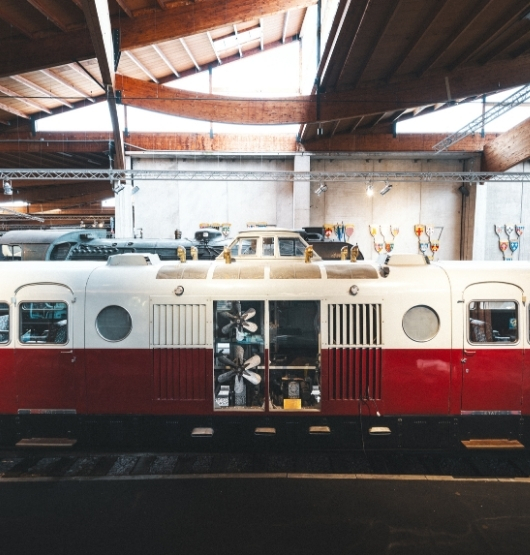
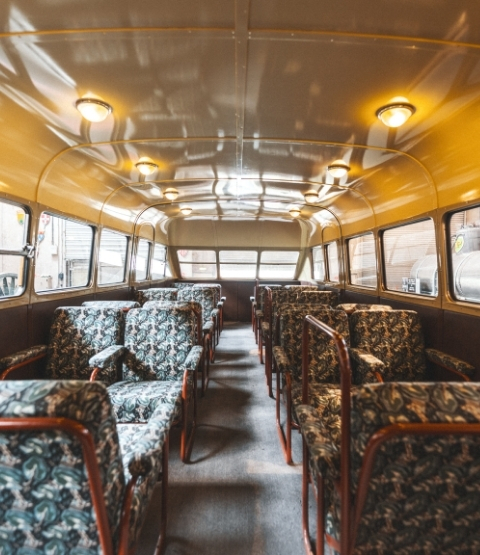
In 1932, Ettore Bugatti met with Raoul Dautry, the director of the Réseau de l’État, the railway company of the time. He proposed designing express railcars powered by the 8-cylinder engine from the Royale. In just nine months, Bugatti designed and built the plans for a new generation of high-speed trains and adapted the engine to meet their specific needs. These streamlined railcars, 23 meters long and equipped with four 200-horsepower engines, were capable of reaching speeds of 140 km/h. A speed record of 194 km/h was even achieved.
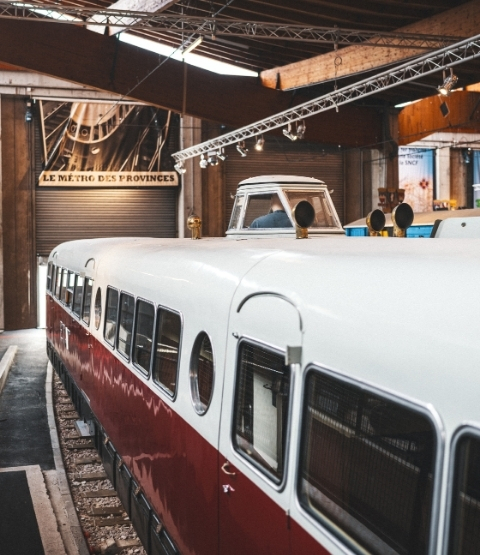
From the spring of 1933, the first units were delivered to what would later become the SNCF. On July 30, 1933, President Albert Lebrun took a Bugatti railcar to attend the inauguration of the Cherbourg maritime station: 3 hours and 15 minutes to travel 372 km! Only one of the 88 Bugatti railcars built survived. Now part of the fleet of the nine presidential railcars and exhibited at the Cité du Train in Mulhouse, it will be the main attraction of the Bugatti exhibition organized for Rétromobile’s 50th anniversary.
Bugatti Otherwise: Prototypes That Made History
But the Presidential Railcar, just like the Bugatti Royale, is just one side of Bugatti’s genius. Throughout his life, the King of Molsheim imagined and designed numerous mechanical oddities that, in their own way, would go on to revolutionize the history of the automobile.
The 1931 Bugatti Type 56 is certainly one of the best examples. This small car, used by Ettore Bugatti to move around inside his Molsheim factory, features one of the earliest electric motors in history. It resembles a toy but remains faithful to the spirit of quality and refinement that defines the brand, all while allowing the Boss to navigate the workshops thanks to its small size.
The Bugatti Type 73 of 1947 reflects Ettore Bugatti’s quest for innovation in design and performance. Created in the context of post-war Europe’s reconstruction, this sports sedan stands out with its fluid and refined shapes that would influence the design of many sports cars of the 1950s.
Finally, the 1956 Bugatti Type 251 represents the culmination of Ettore’s genius in terms of vehicles intended for motorsport. A single-seater prototype designed to compete in Formula 1, it never saw the circuits. However, it introduced a groundbreaking architecture that would later become the norm in this type of competition: the rear transverse engine.
These three vehicles, along with other mechanical oddities conceived by Ettore Bugatti, will be on display alongside the Presidential Railcar during the 2026 Rétromobile exhibition.