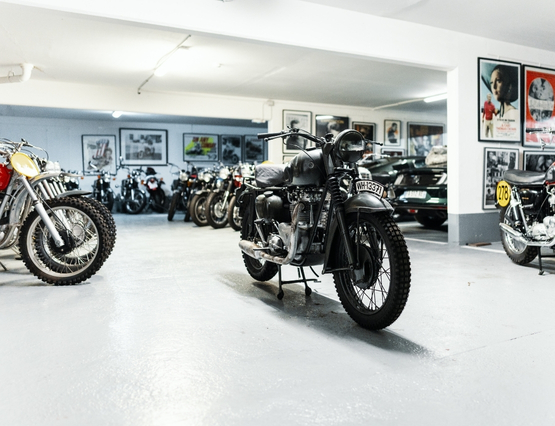
[EXPO] Steve McQueen, a passion for speed
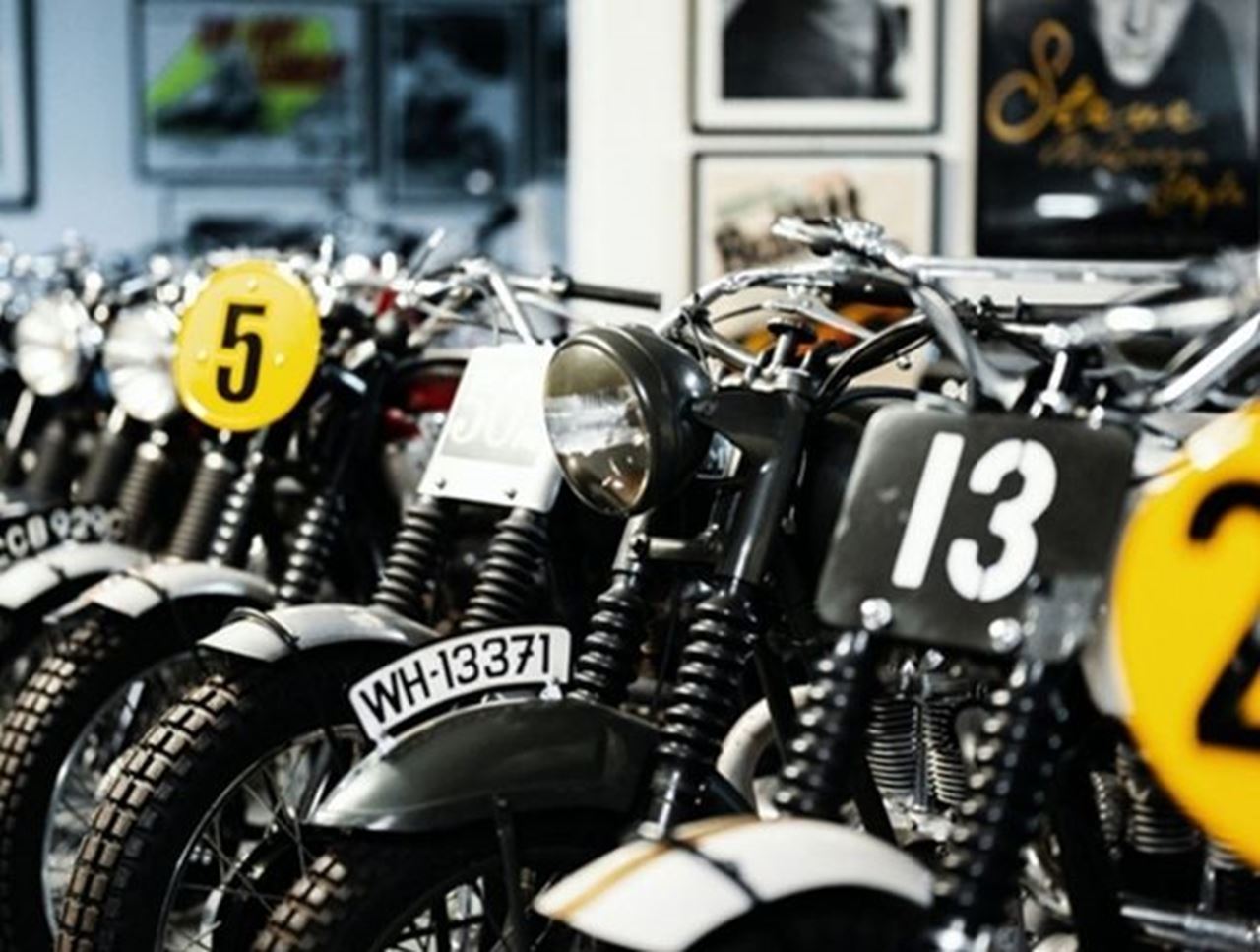
Steve McQueen: the legend retold at Rétromobile
A legend of the world cinema scene, Steve McQueen left behind not only an exceptional filmography, but also an all-consuming passion for sports cars and motorcycles. Visitors to the most exciting pop-up garage dedicated to collector vehicles will have the opportunity to explore this passion at the 50th anniversary edition of Rétromobile.
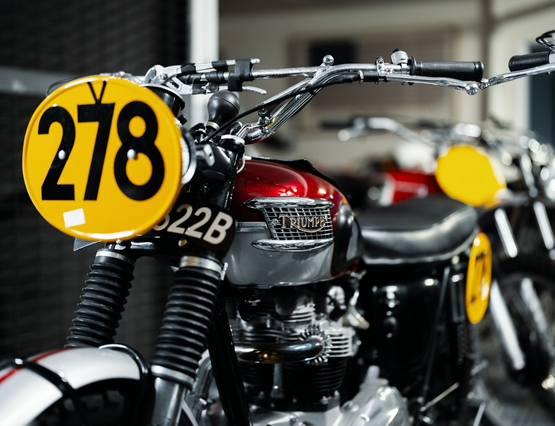
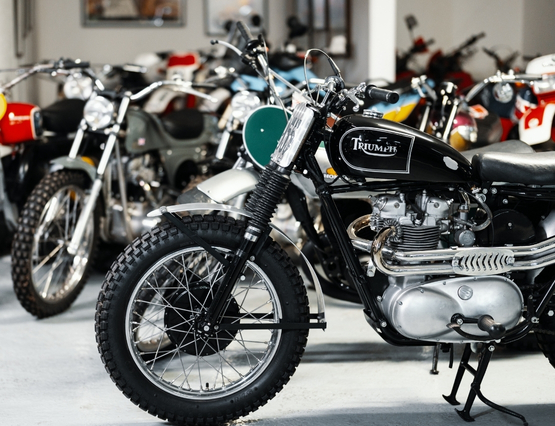
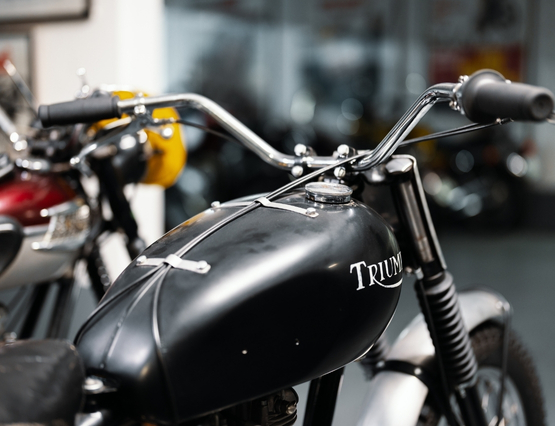
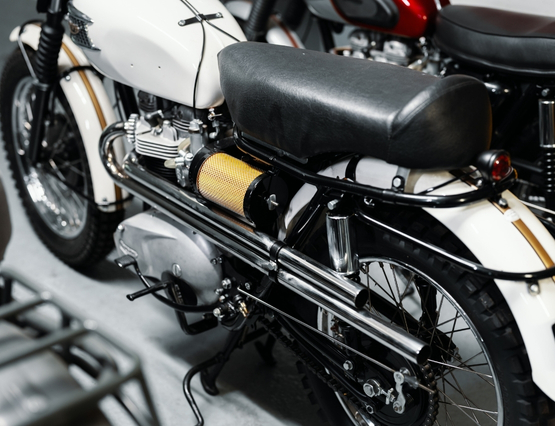
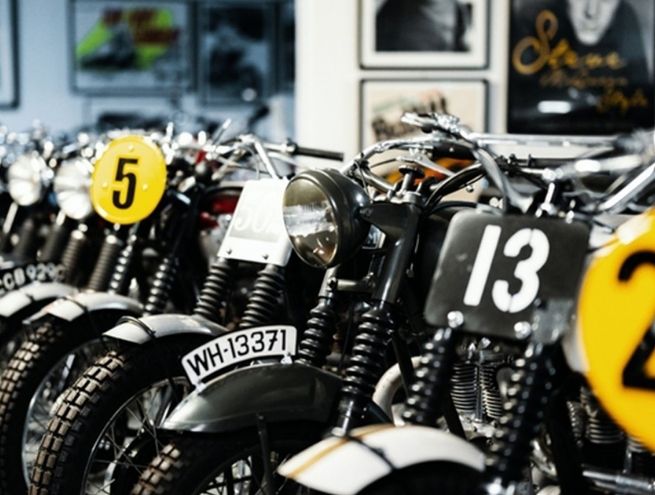
In partnership with Les Epicuriens, NOC and AXA Passion, Rétromobile will organise a grand retrospective dedicated to the ‘King of Cool’ in the Motorcycle section in Pavilion 7.2, showcasing the iconic models that marked the actor’s life. The 1961 Triumph TR6 from ‘The Great Escape’, a 1971 Husqvarna 400 Cross, a 1971 Honda 250 SRM, and the legendary 1968 Mustang Fastback from the film ‘Bullitt’ are just a few of the vehicles that visitors to Rétromobile 2026 will be able to (re)discover.
Steve McQueen: a life dedicated to racing
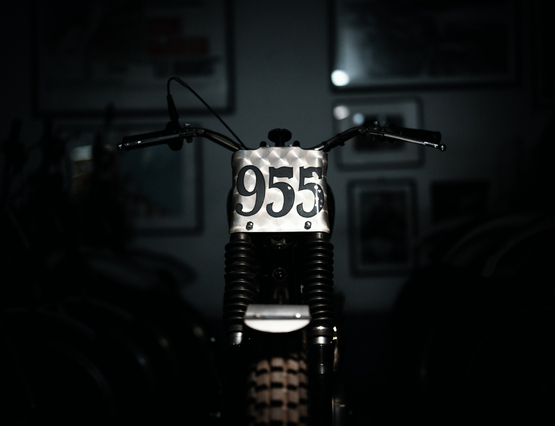
Steve McQueen and motorbikes: the story behind an encounter
Bud Ekins: an encounter like a revelation
Steve McQueen : from king of movie sets to king of the tracks
Not the type to fake things, McQueen pulled off a masterstroke in 1962. During the filming of The Great Escape, the actor, who was decidedly fearless, suggested the final scene to the film's director, John Sturges. In the story of a group of Allied soldiers who escape from a Nazi prison camp, McQueen, playing Captain Virgil Hits, evades his German captors by jumping over a barbed wire fence on a motorbike. Although this stunt, which remains etched in all our memories, was performed by his friend Bud, whom he insisted the production hire, McQueen performed all the other scenes in the motorcycle chase. Upon his return to the United States, Bud Ekins explained that McQueen rode as if he were in a race.
In the wake of The Great Escape, Steve McQueen earned his place in the International Six Days Trial (ISDT) held from 7 to 12 September 1964 in Erfurt, East Germany. As incredible as it may seem, between two film shoots, the actor was signed up to the American team alongside some big names: Bud, of course, but also Bud’s brother Dave, Cliff Coleman and Johnny Steen as reserve riders. Although they were more used to riding in the desert than on muddy forest tracks, the Americans demonstrated their adaptability. Steve displayed plenty of fighting spirit but came off his bike twice. The second fall proved to be his undoing: in an attempt to avoid colliding with a woman who was crossing the track just in front of him, he fell and seriously damaged his Triumph TR6 SC, bending the forks. The only outcome was to retire the bike. His friend Bud fared no better, hitting a low wall and breaking his left ankle. The team still managed to secure the gold medal thanks to Dave Ekins and Cliff Coleman.
Steve McQueen: leopards don’t change their spots
Steve McQueen: king of the road
When he wasn't riding a motorbike, Steve would be behind the wheel of a car. From the late 1950s onwards, with his first acting fees, he bought himself sports cars which he then drove in the SCCA championship. During a race meeting, he befriended English driver Stirling Moss. This led to McQueen taking part in the 12 Hours of Sebring at the wheel of an official British Motor Corporation Austin-Healey Sprite. The car did not finish the race, but he promised to return to Sebring. In the following years, the gruelling pace of filming temporarily kept him away from the racetrack, but things would change in the late 1960s: the racing bug caught up with him again.
The actor-driver decided to make a film about the 24 Hours of Le Mans. He fully intended to take part himself, if only to satisfy his need to compete and assert himself, but also to quench his thirst for speed. To prepare for it, his company Solar Productions acquired a Porsche 908-02 Spyder in 1969, which he drove around American circuits. At the end of March 1970, alongside the world's elite endurance racers, the white Spyder appeared among the entries for the 12 Hours of Sebring. Despite having his left foot in a plaster cast following a fall on his Husqvarna at the Lake Elsinore motocross race two weeks previously, Steve impressed with his speed, which earned him and Peter Revson second place.
Steve McQueen: mechanical feats at the heart of filmmaking art
Whenever he could, which was as often as possible, he would contribute to the scripts of the films in which he starred, adding chase scenes on two or four wheels. This is how he became a silver screen legend with the car chase scene in Bullitt. The film marked the history of cinema because it was the first to feature a real high-speed car chase. Playing an incorruptible cop, Steve McQueen hurtled through the streets and on the roads around San Francisco for an incredible nine minutes and 42 seconds in his Ford Mustang Fastback V8 GT 390 in pursuit of the hitmen’s Dodge Charger. Both legendary models will be on display at Rétromobile.
As usual, the actor refused to use a stunt double and filmed all the chase sequences himself. “We shot the chase scene at the end of filming because Steve wanted to drive himself,” explained director Peter Yates. For a quite simple reason: if McQueen had had even the slightest accident, the director would not have been able to finish the film. This was completely unthinkable, given the financial stakes involved.